
Every year, thousands of people across the UK require fertility treatment to have children.
In 2023, 1 in 32 children was born as a result of IVF – the equivalent of almost one child in every classroom.
Whether due to medical factors, being in a same-sex relationship or considering solo parenthood, there are so many people who want children but – through no fault of their own – require medical support. This has a disproportionate impact on women.
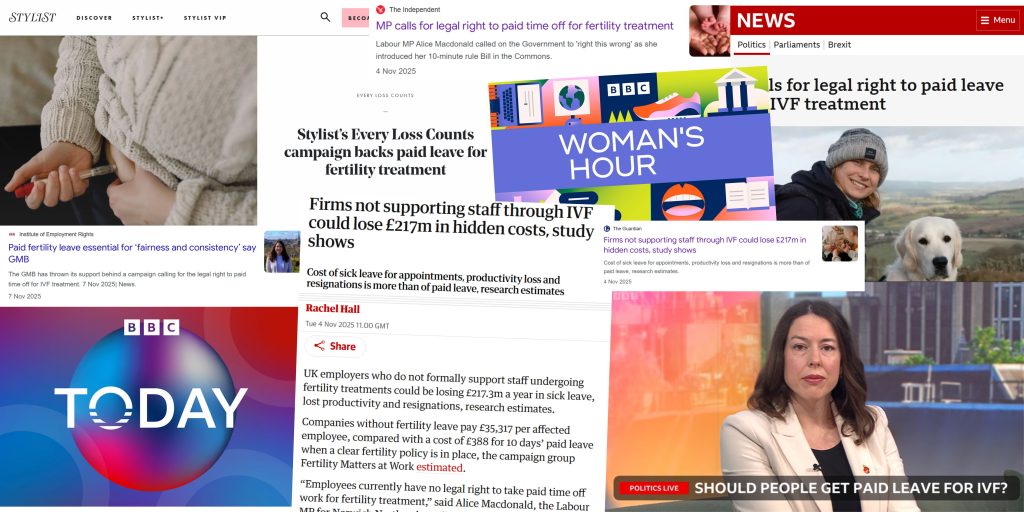
However, currently, employees have no legal right to paid time off for fertility treatment. They have to hope that their employer is sympathetic to their position or take sick leave or annual leave for treatment. In fact, the Equality Act Code of Practice (on Employment) compares a woman having fertility treatment to a man having cosmetic dental treatment.
This is deeply unfair. I’m campaigning for a change in law, but this takes time and employees need support now.
Right now, I’m asking employers to act and sign the Fertility Support Pledge. By signing, organisations can demonstrate their commitment to supporting employees through fertility treatment, creating a more inclusive workplace culture, and setting a standard for others to follow.
This isn’t just the right thing to do, it’s good business sense too – helping to attract the best candidates, retain talent and boost employee engagement. In fact, many businesses like Aviva, E.ON, Centrica and Cadent Gas already offer time off to their employees undergoing fertility treatment. Research conducted by Fertility Matters at Work in 2025 (a fertility-friendly training provider) revealed:
Supporting employees through fertility treatment isn’t just the right thing to do, it makes good business sense and, with fertility rates falling, it’s in our national interest.
I’m proud to be building on the work done by Nickie Aiken, the former MP for Cities of London and Westminster, and thank her for dedication to advancing this cause.
By signing the Fertility Support Pledge, your organisation commits to implementing four key steps:
1. Offer employees time off work to attend fertility appointments.
Whether through flexible working or offering paid time off work, accommodate employees by offering time off work to attend fertility appointments.
2. Clear Policy and Guidance.
Develop and communicate an accessible workplace fertility policy that clearly outlines employees’ entitlements regarding time off. This ensures both employees and managers understand available support from the outset.
3. Awareness and Peer Support
Raise awareness internally and establish a Fertility Ambassador or Champion role within your organisation, an informal position dedicated to opening conversations about fertility treatment, reducing stigma, and helping colleagues access the support available to them.
4. Education and Training for Managers
Equip line managers with training on the realities of fertility treatment, including its physical, emotional, and financial impact. Managers should understand how to provide compassionate, practical support to employees navigating this challenging journey.





Trust in politics is at an all-time low and I can understand why many people simply don’t feel politics works for them.
I will work my hardest to restore trust and show that politicians are not all the same. That’s why I have been out and about speaking to so many people across Norwich North to hear your concerns.